
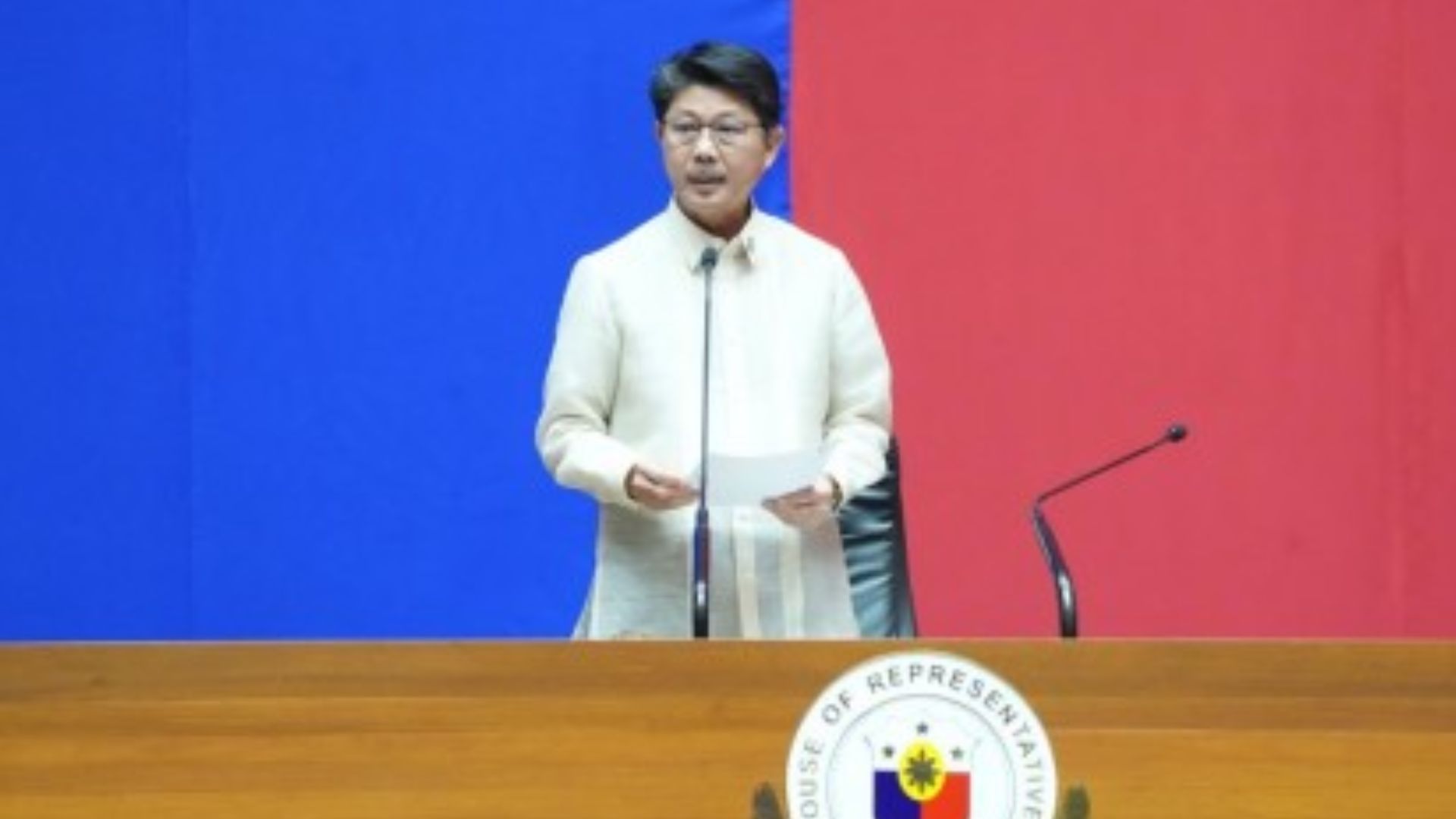







Speaker Faustino “Bojie” Dy III on Wednesday declared a unified, whole-of-government response to the oil price crisis driven by tensions in the Middle East, as the House of Representatives convened the first in a series of high-level multi-panel hearings.
In his opening statement, Dy said the House is working closely with the Executive to address the global fuel shock and mitigate its impact on Filipino households.
“Hindi tayo magkakanya-kanya, bagkus tayo ay magsasama-sama (We will not do it separately, but will, instead, do it together). This is exactly the kind of whole-of-government response our people expect — a Congress that has chosen to work with the Executive to find lasting and forward-looking solutions. At higit sa lahat, ito ang nararapat nating gawin para sa ating mga mamamayan (But most of all, this is the right thing we need to do for our countrymen),” the Speaker said.
The hearing marks the first formal session of the expanded 13-committee panel tasked with crafting a coordinated legislative response, bringing together House lawmakers, Cabinet officials, economic managers and regulators.
Dy stressed that while the crisis cannot be prevented, the government can take decisive steps to address its effects.
“Alam po natin na ang krisis na ito ay hindi natin kontrolado. Hindi man natin mapipigilan ang krisis, subalit mayroong mga paraan para tumugon sa mga pagsubok na ito (We know that this crisis is beyond our control. While we cannot prevent it, we have ways to respond to this challenge),” he said.
“We are here not just to ask questions; we are here to deliver answers – fast, concrete, and felt by the people,” he added.
The Speaker outlined two priorities for the hearing: immediate assistance and long-term reforms.
“Una, ang agarang pagtugon — targeted assistance para maibsan ang pasanin ng ating mga kababayan. Ikalawa, ang mga pangmatagalang solusyon — mga reporma sa enerhiya, ekonomiya, at seguridad sa suplay upang hindi na tayo paulit-ulit na tinatamaan ng ganitong krisis (First, prompt assistance — targeted assistance to ease the burdens of our countrymen. Second, long-term solution — reforms in the energy sector, economy and guaranteed supply to avoid a similar crisis in the future),” he said.
“The objective is clear: protect the Filipino people, stabilize the economy, and build resilience against future shocks.”
The multi-panel hearing, facilitated by Marikina City Rep. Miro Quimbo, chair of the Committee on Ways and Means, consolidates the work of committees handling key sectors to align legislative action with ongoing executive measures.
Cabinet officials, regulators and economic managers attended the briefing to present data, assess supply risks, and propose policy options that can be rolled out immediately.
Dy thanked the Executive for its participation and emphasized the importance of a coordinated national response.
“Ang inyong presensya ngayon ay napakahalaga—ito ay malinaw na mensahe na sa panahon ng krisis, iisa ang direksyon ng ating pamahalaan (Your presence here is important – it sends a clear message that in times of crisis, the government is united in its direction),” he said.
“Maliwanag po ang mensahe natin sa taumbayan—sa gitna ng krisis, magkatuwang at nagkakaisa ang Executive at Legislative branches, ang pamahalaan ay nakatutok sa pagbibigay ng mga solusyon at nakahandang makipagtulungan at kumilos para sa kapakanan ng bawat Pilipino (Our message to the Filipino is clear – amid the crisis, the Executive and the Legislative branches are united, the government is focused on providing solutions and ready to cooperate and act for the welfare of every Filipino).”
The 13 House committees, known as the Legislative Energy Action Development (LEAD) Council, unified their efforts under a single mandate.
Meanwhile, Quimbo noted that the crisis has laid bare the country’s structural weaknesses, particularly its near-total reliance on imported fuel.
“Our country remains heavily dependent on imported oil with almost 100 percent of our fuel supply sourced from abroad and only one remaining refinery operating in the country,” he said.
He pointed to surging pump prices – with gasoline nearing PHP110 per liter and diesel approaching PHP130 – as clear signs that the crisis is already hitting households and key sectors.
Citing Bangko Sentral ng Pilipinas estimates, Quimbo warned that every USD10 increase in Dubai crude beyond the USD80 benchmark could raise inflation by about 0.4 percentage points.
He stressed that the council is designed not only to deliver aid but to drive lasting reforms in energy security, supply systems, and renewable energy investments.
“This council is not merely a response mechanism; it is a reform-oriented platform that will help us adapt and survive when the next energy shock hits,” he said.
Quimbo also underscored the need to protect the middle class, which remains exposed to price shocks despite often being excluded from government assistance.
“But we also need more permanent solutions to provide a stronger safety net for another affected sector of our society – the middle class,” he said.
He said the LEAD Council will address the concerns of key sectors, including agriculture, transport, energy, industry, overseas workers, and the middle class, with the goal of crafting a comprehensive and long-term response.
“Malinaw na ang krisis na ating kinakaharap ay sumasaklaw sa bawat antas ng lipunan at bawat sektor ng ekonomiya (It is clear that the crisis we face today covers all levels of society and all sector of the economy),” Quimbo said.
“At ang magiging tugon ng Kongreso ay komprehensibo, malawakan, at pangmatagalan para sa buong sambayanan (And the response of Congress will be comprehensive, extensive and long-term for the people),” he added. (PNA)