
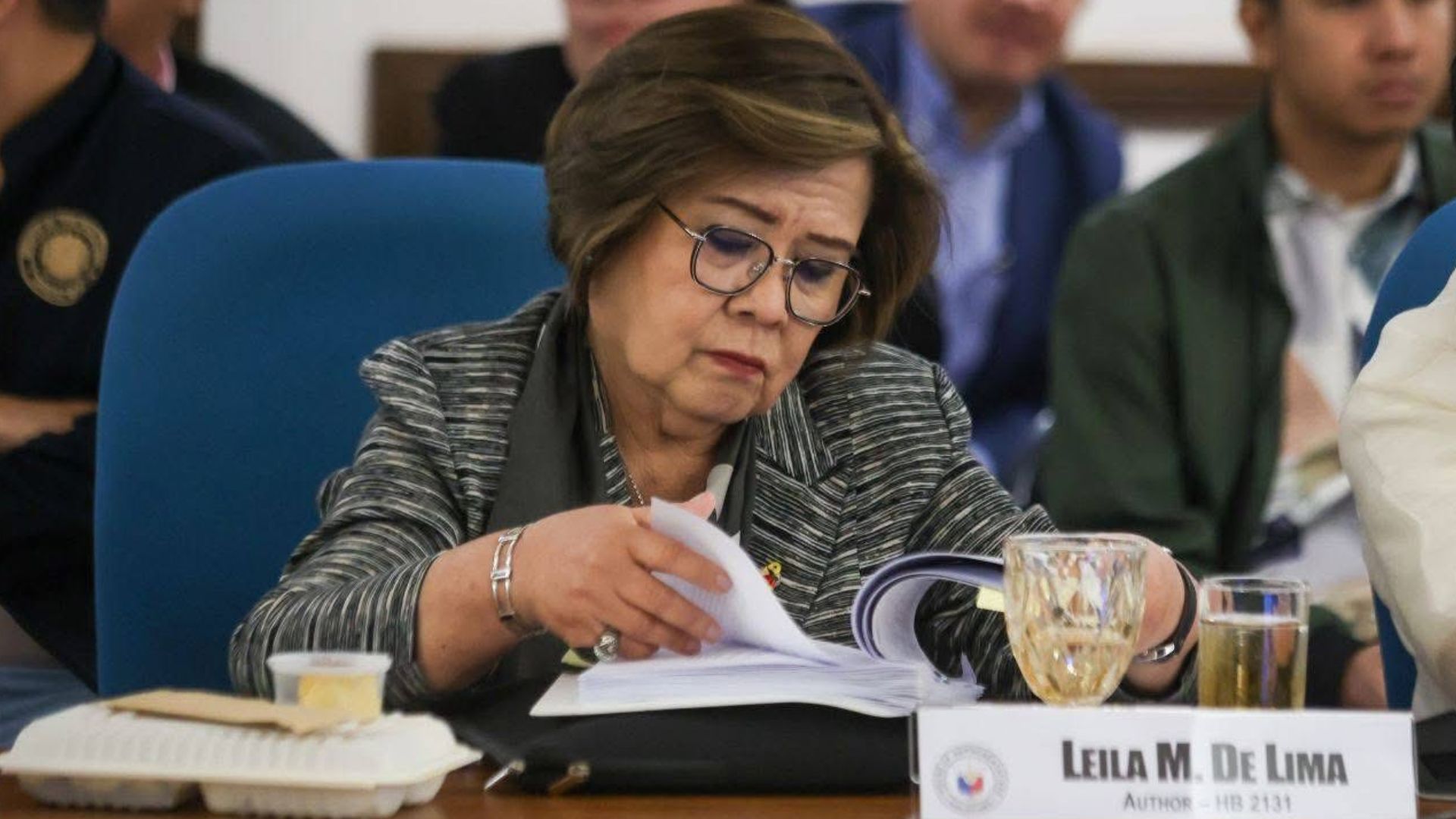







Representative Leila de Lima called for the immediate passage of an Anti-Political Dynasty Law during a public consultation held by the House Committee on Suffrage and Electoral Reforms in Cebu City on February 19, 2026, urging lawmakers to address what she described as systemic barriers to democratic representation.
Speaking before fellow legislators, election officials, and civil society representatives, De Lima said political dynasties have long distorted democratic processes by concentrating power within a limited number of families. She cited empirical studies showing a direct link between the dominance of political dynasties and higher poverty and corruption rates, as well as an inverse relationship with good governance and development.
De Lima referenced academic research and positions from advocates, including Professor Julio Teehankee of the Anti-Dynasty Network, who has argued that dynastic candidates benefit from inherited name recall, established political machinery, and extensive campaign networks. These advantages, she said, create high barriers to entry for non-dynastic candidates and weaken electoral competition.
For decades, numerous Anti-Political Dynasty bills have been filed in Congress without being enacted. De Lima said both houses are now working toward a measure that would provide equal opportunities for public service and representation, in line with the 1987 Constitution’s mandate against political dynasties.
Her proposed measure, House Bill No. 2131, seeks to prohibit political dynasties up to the second degree of affinity and consanguinity. She noted that some legislators, the Commission on Elections, and former Associate Justice Adolfo Azcuna have expressed support for this coverage based on considerations of practicality and implementability. However, De Lima said she is open to expanding the prohibition to the fourth degree after hearing recommendations from civil society groups and members of the academe.
HB 2131 also prohibits succession and overlapping constituencies. Under the proposal, only one family member may hold office if another relative occupies a national post. In the absence of a national officeholder in the family, relatives within the second degree would be barred from holding elective positions within the same province.
De Lima also commended the Cebu City Council for passing a resolution in December 2025 supporting the immediate enactment of an Anti-Political Dynasty Law.
She concluded by emphasizing that political power should serve the public and not be confined to a few families, calling on Congress to finally pass what she described as a genuine reform measure.